

Sarit A. Golub, PhD, MPH developed the GOALS Approach in 2019 in collaboration with the New York City Department of Health, Bureau of HIV
Underpinning the GOALS Approach are four core components rooted in best practices for clinical care:
Initiating sexual health conversations with open-ended, client-centered questions;
Providing universal, opt-out, HIV and STI screening;
Offering universal, rather than risk-based, PrEP and contraception education and access, and
Using affirming, non-discriminating, anti-stigmatizing, and trauma-informed language in all sexual health interactions.
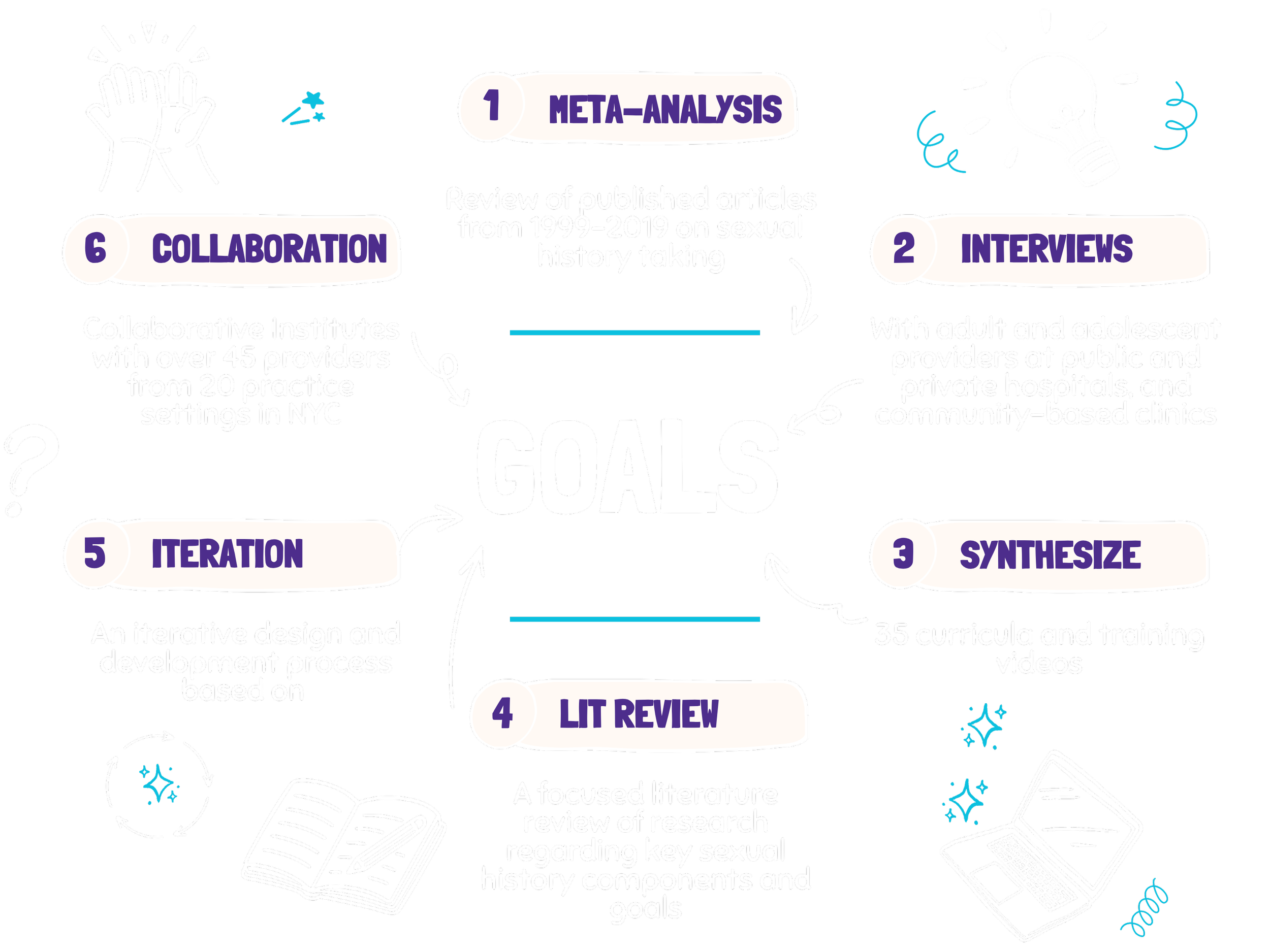
Evidence-based Development Process

GOALS was informed by past research by our team (and others) on ways in which stigma limits access to sexual health and prevention services
-
The Impact of Anticipated HIV Stigma on Delays in HIV Testing Behaviors: Findings from a Community-Based Sample of Men Who Have Sex with Men and Transgender Women in New York City
In this early paper (2013), we demonstrated that individuals with higher anticipated HIV stigma were more likely to avoid HIV testing
-
PrEP Stigma: Implicit and Explicit Drivers of Disparity
In this foundational paper about PrEP stigma (2018) we explain how the amplification of stigma by programs and policies limits engagement in PrEP.
-
Recognizing and disrupting stigma in implementation of HIV prevention and care: a call to research and action
In this implementation paper (2022) we explain how specific stigma processes (e.g., labeling, status loss) manifest in service delivery contexts
Trust, Stigma and Patient Care | National Institute on Drug Abuse (NIDA)
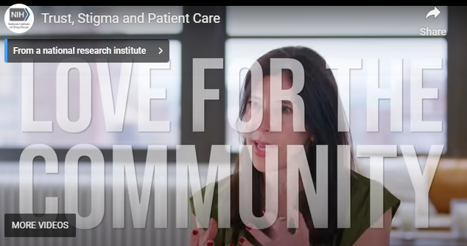
In this video produced by NIDA entitled, Trust, Stigma, and Patient Care, Dr. Golub and other discuss how stigma reduction efforts can improve engagement.
FAQ
-
The GOALS approach is an evidence-based strategy designed to address and overcome many traditional challenges with sexual history encounters. GOALS provides a framework for sexual health conversations and sample language that providers can use to guide their interactions with patients.
-
GOALS is designed to make sexual history questions easier and better for patients and providers. The goal of GOALS is to streamline sexual health conversations and foster conversations that increase patients’ motivation for and commitment to sexual health behavior. GOALS is designed to increase rates of routine HIV/STI testing, increase rates of universal HIV prevention and contraceptive education, and enhance the patient-provider relationship, making it a lever for sexual health and overall wellness.
-
GOALS is not an “intervention”, and it does not proscribe a rigid script to use with patients. The most important part of GOALS is its preamble, which normalizes sexual health conversations and underscores the role of sexual health in overall wellbeing. But GOALS can (and should!) be adapted by providers to meet their practice style, setting, and patients.
-
Four of the five GOALS steps (G-O-A and S) take about 1 minute combined. However, the time you spend listening to the patient and probing for relevant information really varies based on the patient’s needs. For patients with limited or “easy” sexual health concerns, the whole GOALS conversation takes less than 5 minutes. For patients who have more serious concerns, the process can take longer – but adequately and appropriately addressing patients’ sexual health concerns is the goal of GOALS!
-
Few (if any) patients think of themselves as “high risk” or think about their sexual expression as “risk behavior.” Research indicates that this language and framing can be stigmatizing and alienating to patients, causing reactance. In contrast, focusing on sex-positive and patient-centered messaging can improve interaction and enhance trust. Learn more here.
-
Yes! A CDC-funded evaluation of GOALS at 18 clinical sites was conducted from 2022-2024. You can read published papers from that project and learn more here.
-
The GOALS development process included: a) a meta-analytic review of articles published from 1999 -2019 about sexual history taking ; b) key-informant interviews with adult and adolescent providers representing both public and private hospitals, as well as community-based clinics; c) comprehensive review of 35 curricula/training videos; d) focused literature review of research regarding key sexual history components and goals; and e)a series of iterative design and development meeting with over 45 providers from 20 practice settings. Learn more here.
-
That’s OK! GOALS is not designed to force patients to talk about their sexual health if they don’t want to. It is designed to open the door to allow patients to ask questions and get information. You can still offer them opt-out HIV and STI testing, letting them know that they can receive testing without having a conversation about their sexual history. Provide them with some basic information and let them know that you are there to talk when and if they are ready.
-
Yes! See this page for materials designed for particular patient and practice populations.
-
We are working on translating both patient education materials and trainings. These should be available in the Fall of 2026.
-
GOALS is freely available for clinical use in any practice setting. If you are a researcher who would like to use GOALS in a study, please contact Sarit Golub at sgolub@hunter.cuny.edu